Green Energy and Sustainability ISSN 2771-1641
Green Energy and Sustainability 2026;6(4):0009 | https://doi.org/10.47248/ges2606040009
Review Open Access
Review of research and commercial solar concentrated systems for process heat with thermal energy storage in Greece and Cyprus
Spiros Alexopoulos
1
 ,
Zahra Mahdi
1
 ,
Johannes Christoph Sattler
1
,
Dirk Krüger
2
Correspondence: Spiros Alexopoulos
Academic Editor(s): Tony Roskilly, Georgios Martinopoulos, Georgia Kastrinaki, Hande Eryilmaz, Martin Roeb
Received: Nov 11, 2025 | Accepted: Sep 23, 2026 | Published: Nov 16, 2026
This article belongs to the Special Issue Selected Papers from the Conference ICRES 2025
© 2026 by the author(s). This is an Open Access article distributed under the Creative Commons License Attribution 4.0 International (CC BY 4.0) license, which permits unrestricted use, distribution and reproduction in any medium or format, provided the original work is correctly credited.
Cite this article: Alexopoulos S, Mahdi Z, Sattler JC, Krüger D. Review of research and commercial solar concentrated systems for process heat with thermal energy storage in Greece and Cyprus. Green Energy Sustain. 2026;6(4):0009. https://doi.org/10.47248/ges2606040009
Solar concentrating heating systems with thermal energy storage for supplying thermal power to industrial consumers are becoming increasingly important. Worldwide, dozens of such plants, predominantly parabolic trough systems, are already installed. In Greece and the Republic of Cyprus, two countries with high solar resources, such systems are also installed and operated. This paper presents a review with an analytical description of existing concentrated solar thermal (CST) systems for process heat applications operating at temperatures above 150 °C, with a focus on installations in Greece and Cyprus. For this purpose, a wide range of Internet databases, other sources, and scientific papers were reviewed. Overall, two commercial CST installations and four R&D or demonstration CST projects were identified in Greece and Cyprus. The two operational commercial plants represent a combined installed thermal capacity of 645 kWth. Both commercial installations are based on parabolic trough collector technology and operate at a maximum of 160 °C. Thermal energy storage is integrated only in research and demonstration projects, one of which currently includes large-scale storage. In the research and demonstration sector, CST systems are also being investigated for combined heat, cooling, and electricity generation at operating temperatures up to 400 °C. A comparison of the reviewed CST systems in Greece and Cyprus demonstrates several common trends. Commercial installations to date are generally small- to medium-scale systems focused on industrial heat supply at temperatures below 160 °C. In contrast, research and demonstration projects increasingly target higher operating temperatures of up to 400 °C and integrate advanced concepts such as thermal energy storage and combined cooling, heating, and power generation. The largest CST plant in Greece, which uses PTC technology, produces 5.75 MWth and is installed at the Athenian Brewery in Patras. Parabolic trough collectors dominate most identified installations, while Fresnel collector technology appears mainly in experimental applications. Furthermore, as thermal energy storage is deployed only in research and demonstration-oriented projects, this indicates that storage integration is still at an early stage of commercial deployment in the region. Compared with the Heineken brewery in Seville, Spain, which has a PTC field with a nominal output of 30 MWth, and pressurised-water tank storage with a capacity of 69 MWhth, the installed systems in Greece and Cyprus are small, with the exception of the CST plant installed at the Athenian Brewery. The R&D and demonstration plants cover up to 25% of the thermal energy demand. Only one of the two commercial plants covers 70% of the process thermal demand. Challenges and barriers were identified, and recommendations for overcoming these are given. Trends were identified based on the available data. Because reliable data on the economic performance of the examined projects are lacking, this aspect is not a focus of the paper.
Keywordssolar thermal, process heat, solar concentrated system, thermal energy storage, parabolic trough collector, commercial plant, concentrated solar thermal
Solar concentrating heating systems with thermal energy storage for supplying thermal power to industrial consumers are becoming increasingly important. Worldwide, dozens of such plants – predominantly parabolic trough systems – are already installed.
Several plants have also been erected in Europe, mostly in countries with subsidies. A survey on the latest developments in the solar process heat market is published annually by Solrico [1]. The AEE INTEC website provides a good, but not exhaustive, overview of SHIP facilities worldwide [2].
In Greece and the Republic of Cyprus, two countries with high solar potential, such systems are also installed and operated. In Greece, the annual direct normal irradiation ranges from approximately 1,100 to 2,050 kWh/m2, with the highest irradiation values for the island of Crete [3]. Cyprus, which is located roughly at the same latitude as Crete, has an annual direct normal irradiation ranging from around 1,700 to 2,300 kWh/m2 [4]. This paper presents a review and analytical description of existing concentrated solar thermal (CST) systems for process heat applications operating at temperatures above 150 °C, with a focus on installations in Greece and Cyprus.
Projects were identified through scientific literature, European research project documentation, industrial reports, the SHIP database, and publicly available information from technology providers and industrial operators. The objective was to provide a comprehensive overview of known commercial and research-oriented CST installations and projects in the two countries rather than an illustrative selection of examples. Technical data such as collector area, operating temperature, storage capacity, and thermal output were cross-checked, where possible, using multiple sources, including scientific publications, project reports, and company information.
Several concentrated solar thermal (CST) plants have been erected in Europe in recent years. In this section, a few examples are presented.
The largest plant was commissioned at the Heineken brewery in Seville, Spain, inaugurated in September 2023 [5]. The solar field consists of parabolic trough collectors of the type EuroTrough with an aperture area of 43,414 m2 and a nominal output of 30 MWth. The heat transfer medium is pressurised water at 120/140 °C for consumers and up to 210 °C in the solar field to feed 8 pressurised water tanks of approx. 100 m3 each with a total capacity of 69 MWhth. The solar field was sized to provide an annual solar share of approximately 53 % of the factory’s total heat demand. Accordingly, the solar field is oriented along the east-west axis to have a better performance in winter. The following companies were involved: ENGIE (EPC and sells heat), Azteq, Solarlite, Solarlite Spain, and Heineken.
Another plant in Spain was built by CSIN/Solatom at the Heineken brewery in Valencia, Spain, with a collector area of approximately 6,000 m2 and approximately 4 MWth capacity of linear Fresnel collectors. A thermal energy storage system with a capacity of 1.5 MWth is included. It was commissioned in February 2024, covering ~10 % of the site's steam demand [6].
In Belgium, three plants have been erected in recent years for which Azteq erected the parabolic trough fields. Commissioned in 2023, the Avery Dennison industrial plant in Turnhout has a parabolic trough field using EuroTrough type collectors and approximately 3.5 MWth nominal output. It includes a 5 MWhth thermal energy storage system supplied by ENERGYNEST [7]. The solar field supplies process heat at ~280 °C for the production of adhesives, covering up to 100 % of heat demand on sunny days. The plant belongs to the energy service company Sunnacalor, owned by Campina Energie, which sells the heat to Avery Dennison. Two smaller, demonstration plants with 1,100 m2 of collector surface each, with collectors similar to the EuroTrough design, have been set up at Proviron, Oostende, and Adpo, Antwerpen. Both plants provide saturated steam, one at ~155 °C and the other at 185 °C. All three plants use silicone oil as a heat transfer medium.
Several solar thermal plants were set up by Soliterm in Turkey. The most recent installation was commissioned in 2021 at Mayr-Meinhof Graphia in Izmir, with PTC1800 collectors producing about 3 MWth nominal saturated steam at 180 °C [8]. The solar field is erected on a roof.
An overview of commercial CST plants for process heat production located in Greece and Cyprus is given below.
A commercial CST for heat production is located in the industrial zone of Sindos outside the city of Thessaloniki in Northern Greece. The parabolic trough collector (PTC) aperture area is 660 m2, and the solar field reaches an outlet thermal oil temperature of 150 °C. The installation at the Carlsberg Olympic Brewery (see Figure 1) does not use any storage system and produces thermal power exceeding 460 kWth. The PTC field provides solar energy for heat and steam applications in the brewery’s industrial processes [9]. During the sunnier summer months, the solar collectors increase their output, supplying up to 5 % of the brewery's total thermal energy needs. Since the system began operating in 2022, it has covered approximately 70 % of the thermal energy required for the pasteurization process [10].

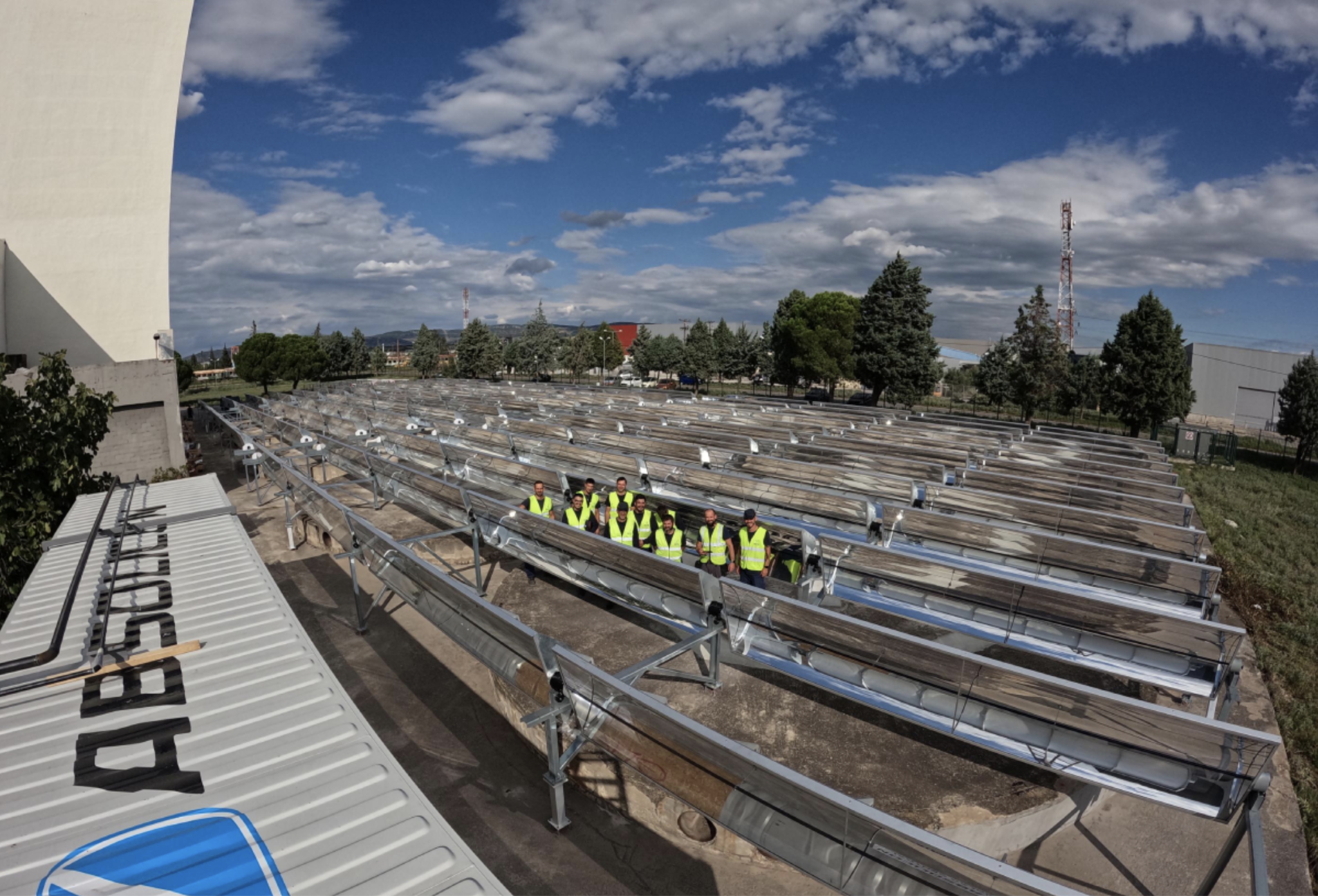
Figure 1. Carlsberg Olympic Brewery (cited with permission from [9]).
A CST system consisting of a parabolic trough collector field comprising 48 collectors and an area of 264 m2 was installed on the rooftop of Colgate-Palmolive's plant (see Figure 2) in Athens in 2018 and 2021 by Absolicon and Sarvanos Solar++. The installed capacity is 185 kWth [11]. The solar field reaches a temperature of up to 160 °C and, via a heat exchanger, pressurised hot water with a temperature of 40–50 °C is produced for a fabric softener reactor process [12].
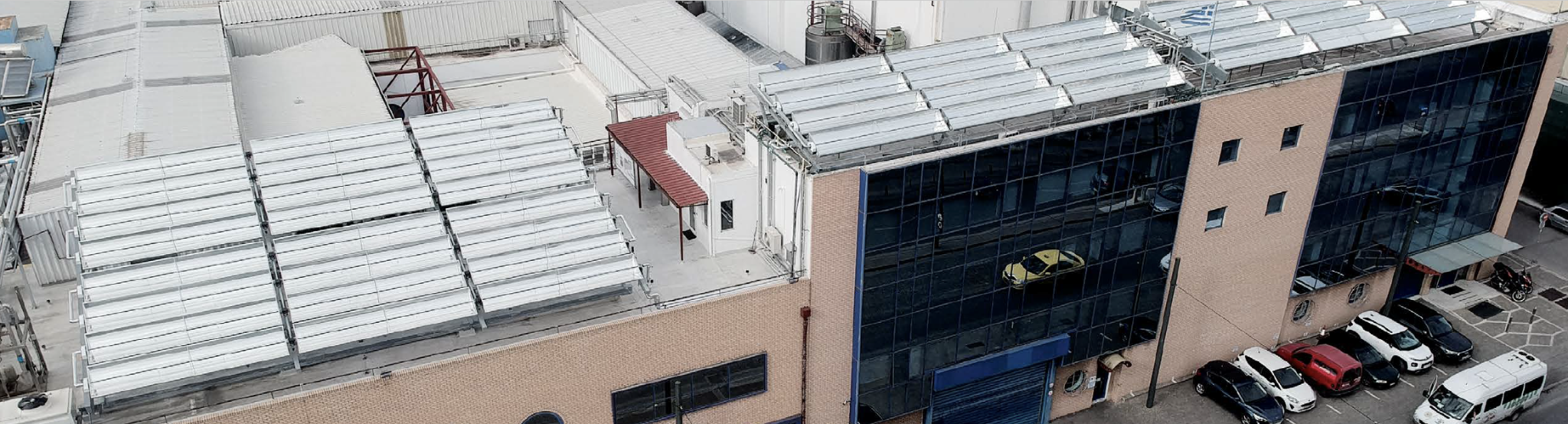
Figure 2. Colgate-Palmolive's plant in Athens (cited with permission from [12]).
At the Koukakis Farm in the region of Kilkis, Greece, a small-scale rooftop CST system consisting of a 10 m2 parabolic trough collector was installed, delivering 7 kWth in nominal thermal power for heating water (process hot water) [13].
In Cyprus, no commercial concentrated solar thermal (CST) projects for process heat production currently exist. However, a commercial plant is planned by Protarget for the industrial laundry sector. The facility shall employ a high-temperature heat transfer fluid (HTF) thermal storage system operating at 275 °C, with a capacity of 1.25 MWth and an expected annual yield of 2,465 MWhth [14].
Only four research or demonstration CST projects exist for process heat production in Greece and Cyprus, which are presented in more detail below.
The Application of Solar Thermal Energy to Processes (ASTEP) project is an initiative aimed at integrating solar thermal energy systems into industrial processes, and one of its applications is the installation of a demonstration plant in Greece. The main objective of the project is to successfully demonstrate the viability of using solar thermal energy to meet heating and/or cooling demands, and to further advance its implementation in industrial processes requiring temperatures of up to 400 °C [15]. The ASTEP project creates an innovative Solar Heat to Industrial Processes (SHIP) concept, based on the modular and flexible integration of two innovative designs: one for the solar collector, the SunDial, and the other for the Thermal Energy Storage (TES), both integrated via a control system, allowing flexible operation and continuous service [16]. Three latent thermal energy storage (LTES) units have been built for this installation. The LTES is connected to a rotary Fresnel collector (SunDial) that provides heat to the process [17]. The industrial site considered is a dairy factory located in Greece at a low latitude, and this dairy factory requires a temperature of 175 °C for its processes [18]. As mentioned in [19], this dairy industry located in Corinth, namely Mandrekas, produces milk, yogurts, desserts, and other products. To produce dairy products, the industry requires steam that is generated in several boilers [20]. For product conservation, the cooling demand can be met with a compression chiller [21]. The steam is produced at 8 bar and 175 °C and flows into a header, where it is distributed at 3 bar to the different processes (pasteurization, hot water, yogurt naturalization). The condensate from the processes is heated up to 100 °C by a preheating line before re-entering the boilers. The chiller sends chilled water into an isolated cold tank, and then it is distributed for both the pasteurization cooling and space cooling at 0 °C. The return water at 4 °C is also directed to the cold tank [19].
In the European project Thermal Energy Storage for On-demand Solar Trigeneration (TES4Trig), a solar combined cooling, heating, and power (CCHP) system is planned to be built on the site of the Lavrion Technological and Cultural Park (LTCP) in Attica, Greece. Such a system can be used to supply electricity, process heat and cooling for industrial applications [22,23]. The solar CCHP system comprises a parabolic trough collector (PTC) field with a nominal thermal power of 150 kWth, a solid-state thermal energy storage (TES) with a capacity of 400 kWhth, as well as an Organic Rankine Cycle (ORC) coupled with an Ejector Cooling Cycle (ECC). The reference CCHP plant can deliver a nominal electric power of 10 kWe [22]. Protarget designed and manufactured the solar field of parabolic trough collectors reaching a temperature of up to 400 °C. The project examined materials and designs to improve storage efficiency and lower costs while developing a management tool to integrate system components effectively [24]. The TES4Trig system concept is designed to expand the functionality of a CST installation beyond thermal process heat by incorporating conversion to electricity and cooling in a single integrated system. A key innovation within TES4Trig is the use of parabolic trough collectors to generate high-temperature heat (up to ~400 °C) that supplies an ORC and an ECC via a specially designed solid-state thermal energy storage (TES) unit. This TES acts as a buffer, storing excess thermal energy produced during peak solar irradiation and discharging it when needed to maintain continuous operation of the energy conversion subsystem. The system's ORC-ECC configuration enables three distinct operating modes: electricity-only, combined heat and power (CHP), and cooling, depending on the prevailing load profile of the end user. In CHP mode, the ORC produces electrical power while capturing useful heat from its condenser for space or process heating. When cooling demand exists, the ECC leverages the ORC's thermal output to produce chilled water. Control strategies prioritize ORC operation when thermal input is sufficient and manage auxiliary systems such as backup heaters and chillers when demand exceeds supply from the solar-driven unit. Simulations conducted for the TES4Trig system show its potential to cover substantial shares of an end user's energy needs under typical operating conditions. For example, a simulation model developed for a demonstration building in Lavrion indicates that the ORC could supply a significant portion of both electrical and heat demands when combined with TES, while system sizing and thermal storage capacity are critical factors influencing overall performance. Additionally, sensitivity analyses exploring different sizing scenarios of the ORC and TES units reveal the importance of balanced component integration to maximize annual solar energy utilization and to ensure reliable tri-generation operation across seasonal variations.
Located in Patras, Greece, an industrial-scale demonstration plant installed at the Athenian Brewery (see Figure 3) in the SUNBREWED project has a nominal system capacity of 5.75 MWth, a 15.5 MWhth steam accumulator storage, and an annual thermal yield of 10,085 MWh. The CST plant entered operation on 31 May 2026 and is by far the largest CST plant supplying process heat in Greece. Among its other aims, the project is intended to demonstrate commercial viability [25,26]. The financial approach is a Thermal Purchase Agreement (TPA) for the plant operation as an energy contracting business model [27]. With this type of financial model, little or no upfront investment is required [27]. The project involves Enerwave Anonymos Etaireia, formerly Elpedison, which provides energy services to commercial and industrial customers. Enerwave Anonymos Etaireia financed 40 % of the investment, while the remaining 60% was a grant from the EU Innovation Fund [28].
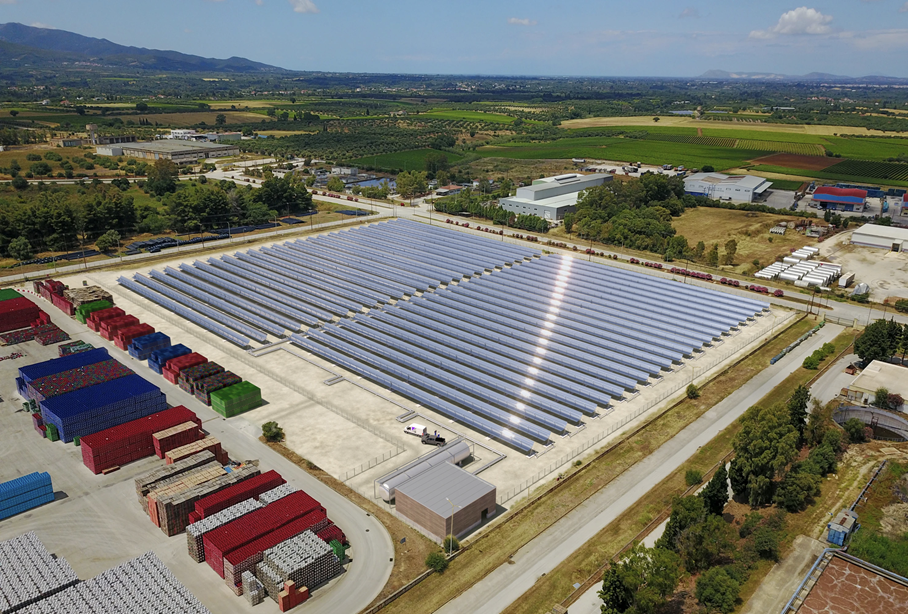
Figure 3. Photo of the CST plant installed at the Athenian Brewery in Patras, Greece.©SUNBREWED [27].
As part of the transnational research project EDITOR and its follow-up project S3, a parabolic trough collector system (PTC) with concrete thermal energy storage (C-TES) was installed, commissioned and successfully operational since 2018 in Limassol (Figure 4), Cyprus. The system is located on the premises of the beverage manufacturer KEAN Soft Drinks Ltd., and its function is to supply process steam for the factory's pasteurisation process.
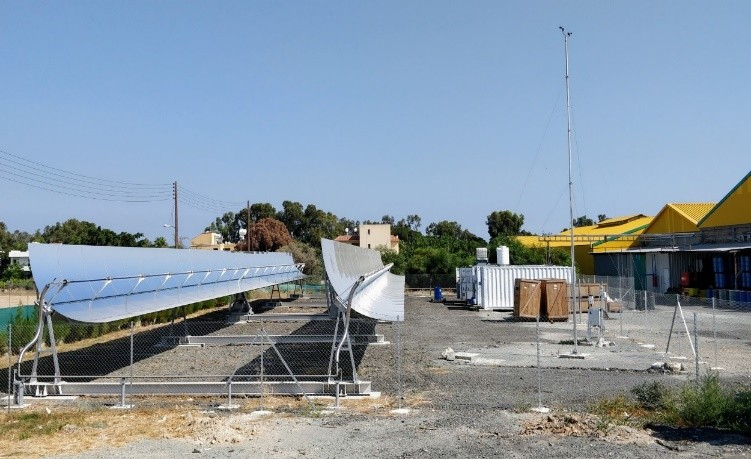
Figure 4. Photo of the two-row PTC system, weather station, as well as three shipping containers accommodating the C-TES and boiler (Photo © Protarget) [30].
The key components of the installed facility are a two-row PTC field with a total length of 96 m, a two-module C-TES (TES 1 and TES 2), a kettle-type boiler, and a thermal oil pump [29]. The C-TES has a capacity of 600 kWhth, allowing on-demand and continuous supply of steam. The thermal oil deployed in the plant is HELISOL XA, which can be heated to 425 °C [30].
The processes that require heat at KEAN are the cleaning/disinfection of bottles and machine parts, pasteurization, and sterilization. It should be noted that the size of the solar system is only a fraction of the actual heat demand required by the industry. The installed parabolic collector is a pilot system developed with the primary goal of demonstrating that this technology is feasible for Cypriot industries [31]. An innovative new concrete heat storage system stores heat so that it can be used to produce saturated steam when direct solar radiation is insufficient. The purpose of the concrete heat storage system is to ensure the industrial steam supply throughout the day, without being affected by periods of low sunshine. The thermal energy storage combines the following advantages: high-temperature stability, low cost, easy handling, low maintenance costs, and high energy density [32]. As part of the subsequent European research program S3, tools were developed to forecast direct normal radiation on an hourly basis for the current day. The use of direct solar radiation forecasts for the intelligent operation of a parabolic solar collector system has many advantages. With this flexible operation, energy efficiency was optimized for months with frequent cloud cover.
From the above information about the commercial and research test facilities, a tabular overview is provided in the tables below. Table 1 shows the commercial CST plants in Greece. Although Greece has good solar potential, only two commercial installations have been set up. All the installed systems are parabolic trough collectors with thermal oil as the HTF, and only one facility is combined with thermal storage. All the installations were carried out after 2015 and on the mainland. One PTC installation is in the brewery sector, and the other is in the household products manufacturing sector. The operating temperature of the SF is up to 160 °C.
Table 1. Commercial CST plants in Greece [9-12,33-35].

Table 2 shows the research and demonstration CST plants in Greece and Cyprus. In contrast to the commercial installations, the demonstration plants target higher operating temperatures of the heat transfer medium, reaching up to 400 °C in the solar circuit. In addition to the brewery sector, applications include juice pasteurization and dairy processing. The demonstration facilities are not limited to heat production, but may also include cooling and even electricity generation.
Table 2. R&D and demonstration CST plants in Greece and Cyprus [14,22,23,25,26,29-31,36-38]. An additional roof-mounted Compound Parabolic Concentrator (CPC) field increases the system capacity to 225 kW. The annual yield includes the CPC.
Overall, two commercial CST installations and four R&D or demonstration CST projects were identified in Greece and Cyprus. The two operational commercial plants represent a combined installed thermal capacity of 645 kWth. Both commercial installations are based on parabolic trough collector technology and operate at a maximum of 160 °C. Thermal energy storage is integrated only in research and demonstration projects, one of which currently includes large-scale storage. In the research and demonstration sector, CST systems are also being investigated for combined heat, cooling, and electricity generation at operating temperatures up to 400 °C. The R&D and demonstration plants cover up to 25% of the thermal energy demand. Only one of the two commercial plants covers 70% of the process thermal demand.
A comparison of the reviewed CST systems in Greece and Cyprus demonstrates several common trends. Commercial installations to date are generally small- to medium-scale systems focused on industrial heat supply at temperatures below 160 °C. In contrast, research and demonstration projects increasingly target higher operating temperatures of up to 400 °C and integrate advanced concepts such as thermal energy storage and combined cooling, heating, and power generation. The largest CST plant in Greece, which uses PTC technology, is foreseen to produce 5.75 MWth and is installed at the Athenian Brewery in Patras. Parabolic trough collectors dominate most identified installations, while Fresnel collector technology appears mainly in experimental applications. Furthermore, as thermal energy storage is deployed only in research and demonstration-oriented projects, this indicates that storage integration is still at an early stage of commercial deployment in the region. Compared with the Heineken brewery in Seville, Spain, which has a PTC field with a nominal output of 30 MWth, and pressurised-water tank storage with a capacity of 69 MWhth, the installed systems in Greece and Cyprus are small, with the exception of the CST plant installed at the Athenian Brewery. Economic performance data were not compared as part of the review. Such data are not available for all facilities.
Although Greece and Cyprus possess high solar irradiation potential, the reviewed cases show that CST deployment up to now remains limited and concentrated mainly in pilot and demonstration projects. Systems integrating advanced thermal energy storage or combined cooling, heating, and power concepts are primarily still in the research or planning phase and rely strongly on European research funding programs such as ASTEP, EDITOR/S3, and TES4Trig. Depending on the type of CST technology tested in the research and demonstration environment, barriers to commercial deployment may include investment costs, technology maturity, economic risks, and land availability constraints.
To overcome these challenges, Greece will need to establish clear policy incentives and stable long-term frameworks, including mechanisms such as power or heat purchase agreements to support dispatchable solar thermal energy. It will also be important to simplify permitting processes and improve spatial planning in order to reduce administrative delays and uncertainty. Access to financing mechanisms and de-risking tools for large-scale projects will be essential to attract investors. Developing a local supply chain and strengthening technical competence can help lower costs and build confidence in the technology, especially if accompanied by a pipeline of demonstration projects. Finally, aligning concentrated solar thermal projects with suitable demand sectors, such as industrial heat and cooling applications, can allow Greece to capitalize on the technology's advantages in heat storage and dispatchability. Adjustments relating to barriers are also observed in the CST industry. By overcoming barriers related to investment costs and economic risks for industrial heat consumers, the industrial-scale CST plant installed in the SUNBREWED project is intended to demonstrate that the deployed energy contracting business model is commercially viable.
The reviewed projects also demonstrate the increasing importance of thermal energy storage (TES) for improving the dispatchability and operational flexibility of CST systems. Different TES concepts are applied depending on the intended application and operating temperature range. Commercial projects mainly rely on comparatively mature technologies such as steam accumulators for short-term thermal buffering, whereas research-oriented projects increasingly investigate advanced storage concepts, including concrete and latent thermal energy storage. These technologies offer advantages such as higher operating temperatures, improved thermal stability, and the possibility to decouple solar heat production from industrial demand profiles. In particular, the integration of TES enables a more continuous supply of steam and heat during periods of fluctuating solar irradiation and supports the operation of combined cooling, heating, and power systems. However, the reviewed cases also indicate that advanced TES solutions are still largely limited to demonstration projects and have not yet achieved broad commercial deployment, partly due to increased system complexity and investment costs.
The TES4Trig demonstrator also underscores the potential benefits of dispatchable thermal solar systems in regions with high solar irradiation, like Greece and Cyprus. By storing high-temperature thermal energy for on-demand conversion to power and cooling, such systems can mitigate intermittency challenges associated with solar technologies while serving multiple energy vectors. This integration could help overcome barriers that have otherwise limited CST deployment, such as the difficulty of matching solar supply with diverse industrial load profiles and the need for additional revenue streams beyond process heat alone. Furthermore, the simulation and scale-up assessments conducted for TES4Trig suggest that appropriately designed CST-based CCHP can deliver a significant share of the energy demand for large facilities, particularly those with relatively stable consumption patterns.
In Greece and the Republic of Cyprus, two countries with high solar resources, several CST systems are installed and operated. Overall, two commercial CST installations and four R&D or demonstration CST projects were identified across these two South-East European countries. Both commercial installations are based on parabolic trough collector technology and operate at a maximum of 160 °C. Thermal energy storage is integrated only in research and demonstration projects, one of which currently includes large-scale storage.
The above-mentioned CST installations and projects were identified through scientific literature, European research project documentation, industrial reports, the SHIP database, and publicly available information from technology providers and industrial operators. This review provides an analytical description of existing commercial, R&D, and demonstration solar process heat installations operating at temperatures above 150 °C. The objective was to provide a comprehensive overview of known commercial and research-oriented CST installations and projects in the two countries rather than an illustrative selection of examples.
Various barriers exist that can explain why the deployment in both countries has been limited. Growing interest in the installation of CST systems is being observed, particularly in the Greek brewery sector. The future adoption of energy contracting models could accelerate the deployment of CST plants by eliminating two key obstacles: the high initial investment costs and the financial uncertainty faced by industrial heat users. This approach not only reduces the financial burden on industries but also ensures a stable and predictable energy supply, making solar heat a more attractive alternative to conventional fossil-based sources. Additionally, such models could unlock new market opportunities by demonstrating the technical and economic viability of CST in industrial applications.
The following abbreviations are used in this manuscript:
Not applicable.
Not applicable.
Not applicable.
The international project EDITOR was funded by the Research Promotion Foundation (RPF) from Cyprus, the Ministry of Economy and Competitiveness (MINECO) from Spain, the Federal Ministry for Economic Affairs and Energy (BMWE) from Germany, as well as the Ministry of Culture and Science of the German State of North Rhine-Westphalia (MKW NRW) from Germany. SOLAR-ERA.NET, a European network that brings together funding organisations, is supported by the European Commission within the EU Framework Programme for Research and Innovation HORIZON 2020 (Cofund ERA-NET Action, N° 691664 and N° 786483).
Project Smart Solar System was supported under the umbrella of SOLAR-ERA.NET Cofund. SOLAR-ERA.NET is supported by the European Commission within the EU Framework Programme for Research and Innovation HORIZON 2020 (Cofund ERA-NET Action, N° 691664). Funding from the Ministry of Economic Affairs, Industry, Climate Action and Energy (MWIKE NRW) on the basis of the directive on the granting of funding from the "Programme for the rational use of energy, regenerative energies and energy saving - progres.nrw - programme area innovation", Germany.
Project TES4Trig was supported under the umbrella of CSP ERANET 1st Cofund Joint Call by Projektträger Jülich (Forschungszentrum Jülich GmbH), General Secretariat of Research and Innovation (GSRI) and the Centre for the Development of Technology and Innovation (CDTI). Funding from the Ministry of Economic Affairs, Industry, Climate Action and Energy (MWIKE NRW) on the basis of the directive on the granting of funding from the "Programme for the rational use of energy, regenerative energies and energy saving - progres.nrw - programme area innovation", Germany.
The authors have declared that no competing interests exist.
| 1. | The evolving SHIP supply industry: Key players and new entrants [Internet]. 9 April 2025. [cited 20 October 2026]. Available from: https://solarthermalworld.org/news/the-evolving-ship-supply-industry-key-players-and-new-entrants/. |
| 2. | SHIP Plants [Internet]. AEE [cited 2026 Oct 20]. Available from: https://energieatlas.aee-intec.at/index.php/view/map?repository=ship&project=ship. |
| 3. | Solar resource maps of Greece [Internet]. Solargis [cited 2026 Oct 20]. Available from: https://solargis.com/resources/free-maps-and-gis-data?locality=greece. |
| 4. | Solar resource maps of Cyprus [Internet]. Solargis [cited 2026 Oct 20]. Available from: https://solargis.com/resources/free-maps-and-gis-data?locality=cyprus. |
| 5. | Heineken Brewery Seville, Spain. Project Overview [Internet]. Solarlite [cited 2026 Oct 20]. Available from: https://www.solarlite.de/en/project_heinekensevilla.cfm. |
| 6. | Kyotherm inaugurates a concentrating solar thermal project supplying heat to the Heineken brewery in Valencia in partnership with CSIN. Press Release [Internet]. Kyotherm; 26 March 2024. [cited 2026 Oct 20]. Available from: https://kyotherm.com/wp-content/uploads/2024/03/20240326-Press-Release-CSIN.pdf. |
| 7. | Avery Dennison Commissions Europe's Largest Concentrated Solar Thermal Platform and Thermal Storage Unit in Turnhout, Belgium [Internet]. Avery Dennison; 2023 Sep 6 [cited 2026 Oct 20]. Available from: https://www.averydennison.com/en/home/news/press-releases/avery-dennison-commissions-europes-largest-concentrated-solar-thermal-platform-and-thermal-storage-unit-in-turnhout-belgium.html. |
| 8. | World's largest industrial solar thermal cooling plant investment in Izmir by MM-Group and Soliterm [Internet]. izmir Development Agency. 2022 Jun 22 [cited 2026 Oct 20]. Available from: https://investinizmir.com/news/2022/worlds-largest-industrial-solar-thermal-cooling-plant-investment-in-izmir-by-mm-group-and-soliterm/. |
| 9. | Olympic Brewery: Paving the way for beer production using solar energy, in collaboration with Absolicon [Internet]. OLYMPIC BREWERY; 2023 Mar 5 [cited 2026 Oct 20]. Available from: https://www.olympicbrewery.gr/en/news/beer-with-solar-energy/. |
| 10. | In 2023 Carlsberg installed absolicon solar thermal to generate steam at olympic brewery's site, in Sindos, Salonika [Internet]. Absolicon [cited 2026 Oct 20]. Available from: https://www.absolicon.com/selected-projects-by-absolicon/carlsberg-group-brewery-solar-plant-greece-2/. |
| 11. | COLGATE-PALMOLIVE, GREECE. HOUSEHOLD CHEMICALS INDUSTRIAL CASE. |
| 12. | Case Study: Solar Thermal at Colgate-Palmolive Factory [Internet]. RTC; 2023 Jun 6 [cited 2026 Oct 20]. Available from: https://www.renewablethermal.org/wp-content/uploads/2018/06/RTC_Colgate-Palmolive-Case-Study_June-6_2326.pdf. |
| 13. | Drosou V, Christodoulaki R, Kyriaki E, Papadopoulos AM. Concentrating solar thermal systems in Greece: current status and future potential [Internet]. International solar energy society; 2020 [cited 2026 Oct 20]. Available from: https://proceedings.ises.org/conference/eurosun2020/papers/eurosun2020-0088-Drosou.pdf. |
| 14. | References [Internet]. Protarget AG [cited 2026 Oct 20]. Available from: https://protarget-ag.com/references/. |
| 15. | Application of Solar Thermal Energy to Processes [Internet]. ASTEP [cited 2026 Oct 20]. Available from: https://astepproject.eu/. |
| 16. | ASTEP Project Shines at EuroSun 2024! [Internet]. 2024 Sep 3 [cited 2026 Oct 20]. Available from: https://astepproject.eu/astep-project-shines-at-eurosun-2024/. |
| 17. | Solano JP. A fast response thermal energy store for solar heat in industrial processes. Construction and testing in H2020 ASTEP project. Poster for TES 2025. |
| 18. | Gobio-Thomas LB, Abbas R, Darwish M, Stojceska V. Decarbonization of industrial processes using novel Sundial solar thermal units. Proceedings of the 2nd World Conference on Sustainability, Energy and Environment; 2022 Dec 9-11; Berlin, Germany. |
| 19. | Ibarra M, Barbero R, Rovira A. Steady-state analysis of an innovative rotatory Fresnel collector integrated into two industrial processes. Therm Sci Eng Prog. 2025;61:103549. [Google Scholar] [CrossRef] |
| 20. | Masera K, Tannous H, Tassou S, Stojceska V. Application of Solar Thermal Energy to Dairy Industry. Proceedings of 17th UK Heat Transfer Conference; 2021 Sep 5-7; Manchester, UK. [CrossRef] |
| 21. | Masera K, Tannous H, Stojceska V, Tassou S. An investigation of the recent advances of the integration of solar thermal energy systems to the dairy processes. Renew Sustain Energy Rev. 2023;172:113028. [Google Scholar] [CrossRef] |
| 22. | Mahdi Z, Sattler JC, Alexopoulos S, Braimakis K, Teixeira Boura C, Herrmann U, et al. Modeling and Evaluation of a Solar Trigeneration System With Thermal Energy Storage: A Study. Proceedings of SolarPACES Conference 2023; 2023 Oct 10–13; Sydney, Australia. [CrossRef] |
| 23. | Alexopoulos S, Mahdi Z, Sattler JC. Simulation and Sensitivity Analysis of a Solar Driven Trigeneration System with Thermal Energy Storage. Proceedings of 30th SolarPACES Conference; 2024 Oct 8–11; Rome, Italy. [CrossRef] |
| 24. | Thermal Energy Storage for On-demand Solar Trigeneration (TES4Trig). Project description [Internet]. CSP ERA-NET [cited 2026 Oct 20]. Available from: https://csp-eranet.eu/results/thermal-energy-storage-demand-solar-trigeneration-tes4trig. |
| 25. | Protarget AG. Solar thermal energy contracting – Sustainable and cost-effective process heat on demand, Green Industry: Sustainable Solutions for Renewable Energy and Heat; 2025 May 13; Thessaloniki, Greece. Available from: https://griechenland.ahk.de/de/content/download/384057/5996868%3Fversion%3D1. |
| 26. | SUNBREWED: Solar eNergy for the BREWEry industry [Internet]. 2026 Oct 2 [cited 2026 Oct 20]. Available from: https://ec.europa.eu/assets/cinea/project_fiches/innovation_fund/101156599.pdf. |
| 27. | CINEA Features SUNBREWED as a Flagship Project Powering Net‑Zero Steam for Europe’s Brewing Industry [Internet]. SUNbrewed [cited 2026 Oct 20]. Available from: https://www.sunbrewed.eu/post/cinea-features-sunbrewed-as-a-flagship-project-powering-net-zero-steam-for-europe-s-brewing-industry. |
| 28. | ELPEDISON will construct the largest Solar Thermal Steam Generation System in Greece [Internet]. Elpedison Press Release; 2025 Mar 12 [cited 2026 Oct 20]. Available from: https://www.enerwave.gr/en/the-company/press-releases-announcements/-press-releases/elpedison-will-construct-the-largest-solar-thermal-steam-generation-system-in-greece/. |
| 29. | Sattler JC, Alexopoulos S, Chico Caminos RA, Mitchell J, Ruiz V, Kalogirou S, et al. Dynamic Simulation Model of a Parabolic Trough Collector System with Concrete Thermal Energy Storage for Process Steam Generation. AIP Conf Proc. 2019;2126(1):150007. [Google Scholar] [CrossRef] |
| 30. | Sattler JC, Chico Caminos R.A, Atti V, Ürlings N, Dutta S, Ruiz V, et al. Dynamic Simulation Tool for a Performance Evaluation and Sensitivity Study of a Parabolic Trough Collector System with Concrete Thermal Energy Storage. AIP Conf Proc. 2020;2303(1):160004. [Google Scholar] [CrossRef] |
| 31. | Ktistis PK, Agathokleous RA, Kalogirou SA. Experimental performance of a parabolic trough collector system for an industrial process heat application. Energy. 2021;215. (Part A):119288. [Google Scholar] [CrossRef] |
| 32. | EDITOR 2025 Flyer. Solar-Institut Jülich. |
| 33. | Absolicon and Calsberg join forces: pilot project launched in Greece [Internet]. Euroheat & Power (EHP) [cited 2026 Oct 20]. Available from: https://www.euroheat.org/news/absolicon-and-calsberg-join-forces-pilot-project-launched-in-greece. |
| 34. | WORLD WIDE PROJECTS - INDUSTRIAL SOLAR THERMAL [Internet]. ABSOLICON [cited 2026 Oct 20]. Available from: https://www.absolicon.com/wp-content/uploads/2024/09/Absolicon_Reference-Brochure-2024.pdf. |
| 35. | Data Sheet - T160 Solar Collector [Internet]. ABSOLICON [cited 2026 Oct 20]. Available from: https://www.absolicon.com/wp-content/uploads/2020/04/SALMARENG004_18_T160-Collector-Data-Sheet_EN_Web.pdf. |
| 36. | Abbas R, Barnetche M, Millán JS, Roncal-Casano JJ, Golpour I, D’Souza D. Installation and start-up of two modular rotary collectors for SHIP: first experimental results [Internet]. SolarPACES [cited 2026 Oct 20]. Available from: https://astepproject.eu/wp-content/uploads/2024/11/SolarPACES_2024_Abstract_ TemplateSunDial_DD.-IG.pdf. |
| 37. | Abbas R, Barbero R, Rovira A, Barnetche M. SunDial, a new collector for solar heat for industrial processes: Optical and thermal design. Therm Sci Eng Prog. 2023;44. ;102025. [Google Scholar] [CrossRef] |
| 38. | CADE proudly announces the first six months of EDITOR steam production [Internet]. EDITOR CSP [cited 2026 Oct 20]. Available from: https://cadeengineering.com/cade-announces-first-six-months-of-editor-steam-production/. |


Copyright © 2026 Pivot Science Publications Corp. - unless otherwise stated | Terms and Conditions | Privacy Policy